Posts

Showing posts with the label English language

English Spelling

Image
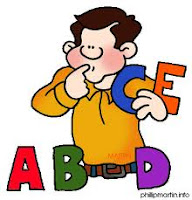
For anyone learning English, including English-speaking children learning to read and write, English spelling is a nightmare!   English is a difficult language to spell as there are few consistent rules of either spelling or pronunciation. Generally I don't have much difficulty. English is my first language, I love reading, enjoyed learning lists of words for weekly school spelling tests and was not disadvantaged by dyslexia or similar problems. This means that I don't often make spelling mistakes.For this I am grateful. Spelling gives clues to language origins, so to spell English words it can help to know Latin, French, German, Flemish, Scandinavian languages and classical Greek among others. Language origin is one of the main arguments against spelling reform as is the fact that there is no agreed authority to determine spelling which depends therefore on accepted practice and usage. I think the efforts of the English Spelling Society to simplify the way English is spelt...
How to Spell

Image
How good is your spelling? If you struggled learning to read and write in English or if English isn't your first language, you know how difficult it is to spell. Like its pronunciation, its spelling is inconsistent. Here's a few examples, but these are only the tip of the iceberg: There are some rules but these only work for some words, for example the 'i' before 'e' except after 'c' rule only applies to 11 words. Different sounds can be represented by the same letter or combination, for example 'ough' is pronounced at least 6 different ways, try 'cough', 'enough', 'nought', 'plough', borough', 'through'. Many English words are homophones i.e. some words sound the same but have different meanings differentiated by the spelling, e.g. 'tea'/'tee', 'gait'/'gate', 'made'/'made'. There are also many silent letters. For example: the 'k' is not...

What we British really mean

Image
"NOT HOW ODD BUT HOW INTERESTING" is an unforgettable phrase from my schooldays. It was used by the head teacher at the end of most summer terms. Well that's how I remember it, but I've discovered I may be the odd one here. As many of us were departing for far-flung places, the head wanted to encourage taking a genuine and respectful interest in different peoples and cultures. We were forbidden to say (or even think) 'HOW ODD' when faced with unusal new experiences. We were allowed to say (or think) 'HOW INTERESTING '. Secretly, at the time, my friends and I used to laugh at this advice and the manner in which it was delivered, especially the word "IN-TER-EST-ING " pronounced slowly and with great enthusiasm. I now see it as useful advice in lots of situations. At some point in their growing up I must have passed this on to my children, who now know that if I say "HOW IN-TER-EST-ING " that what I probably really mean is HOW ODD. B...

Putting Words in Our Mouths for 400 Years

Image
2011 is the 400th anniversary of the translation of the Holy Bible known as the Authorized Version (AV) or more commonly the King James Bible (KJB). Some months into 2011 I thought it was about time a published a HAPPY BIRTHDAY post. For regularly reading, study and understanding I prefer to use more modern and more accurate translations. But for sheer beauty of the sound of its language when read aloud the King James Bible is hard to beat. One of the translators' intentions was that its phrases should sound well when read aloud in church. And they do. This book has greatly enriched our language both in literature and the spoken word. Some of its words and idioms are completely unintelligible to anyone not brought up on 16th/17th century English. But many phrases in common use now in everyday English originate from the King James Bible. If you want examples of such phrases, have a quick listen to Glen Scrivener's cleverly contrived 3 minute poem in which he uses 100 of the...