Posts

Showing posts with the label count your blessings

Reconciliation and Peace

Image
This sculpture is called 'Reconciliation'. It is in the ruins of the old Coventry Cathedral in England. An identical sculpture is in the peace garden of Hiroshima, Japan. It is by Josefina de Vasconcellos.   This is the last of my posts following Christian Aid's 'Count Your Blessings' calendar for Lent 2012. I've found it hard to keep these going as a daily Lent discipline (except on Sundays). I definitely haven't always felt like it, which I think has probably shown in some posts. I wondered if it was worth doing. The hardest part was having to forego posting about whatever I happened to feel like writing about. It seemed that every day there was writing I would have preferred to have done. I think it has been worth it, even only in reminding me of the many many ways in which I am blessed - with taken-for granted things like clean water, sanitation, food and education. A few days ago I was sitting in a church and was completely overwhelmed with a ...

Giving and Good Friday

Image
It looks as if the Shipwrecked Mariners Society could do with a new coat of paint for their Brightlingsea old sea mine, now converted to a charity collecting box. According to Christian Aid's 'Count Your Blessings' calendar's focus for today "In 2010, 73% of the British population donated to charity." I don't know how to interpret that percentage figure. It sounds like good news - a majority of people in the UK contributed to charity in 2010. Should we pat ourselves on the back? Or not? How much of that giving was token giving? Or giving in the hope of gaining something, as in a raffle or lottery? What about the 27% who didn't give? Does that mean 27% of the population are too poor? Or too mean? Or what? It's Good Friday, a day to contemplate the most generous giving, giving all - not a few coins in a charity box, giving life, giving without expectation of gain, giving not to look good - but in shameful humiliation, giving out of pure lov...

Green Beans from Egypt?

Image
What's the best thing to do? Should you always buy locally grown and in season fruit and vegetables? My gut feeling tells me that's the right thing to do for the sake of the planet. If I buy green beans in winter for example - which I sometimes do - I feel guilty. Should I? Today the Christian Aid 'Count Your Blessings' calendar tells me "COC Bless in Egypt has trained farmers to grow green beans for export to Europe, earning them five times the local market price." If this means that poor farm ers can make a living wage I can see that's good in the short term, but what about other unintended consequences of this? I've no time to consider that further today. I'd welcome your comments. Christian Aid is suggesting giving 10p for any fruit or vegetable you bought this week that was not grown in Britain. I can't help feeling this is a fine for doing a 'bad' thing i.e. not using local suppliers. Or is it meant to be a gift i...

25% Unemployed is too many

Image
A member of my family is in South Africa at the moment, so that country is on my mind. The only connection between this photo, my opening statement and what follows is that these rhinos are South African.  I was shocked to read in Christian Aid's 'Count Your Blessings' calendar that "more than a quarter of the working-age population in South Africa are out of work, compared to 8 out of 100  in Britain and Ireland." I thought the level of unemployment, especially among the young in Britain was worrying but to have 25% of the working-age population unemployed is a frightening and unsustainable situation for any country.  Christian Aid suggests giving £1 if you are currently employed. Image:  South Africa. mazzaliarmadi.it wildlife: CC Licence

Child Labour

Image
One of my maternal great grandfathers started work in a woollen mill at the age of 9 years. He was lucky in that he was able to attend school 2 hours a day, which for him proved really important. But he also had to put in a daily10 hour shift in the mill 5 days a week with a slightly shorter shift on Saturdays.  His family were members of a Methodist church. He was an exceptional scholar and the local Methodist minister encouraged him to work hard at his studies. He did so well he was able to leave the mill-work and become a 'pupil teacher' at 13 years old. This role gave him access to further part-time study. At 18 he took the Queen's Scholarship examination. (It was Queen Victoria then.) He passed at 1st Class level which meant he could study full time at Westminster College (a Methodist teacher-training college) in London with all his fees and board paid for. After college he returned to Yorkshire to teach in a local school and within a few years became a headmaster...

Work

Image
What's this selection of grubby coins from my purse got to do with anything? It's less than £1 which these days doesn't seem worth much. Well, for a start, imagine this is all the money you had to live on each day. How would you spend it and how would you survive? This is the last week of Christian Aid's 'Count Your Blessings' calendar for this year. I considered not writing about it this week as it is Holy Week. But having posted on the calendar theme every day since Ash Wednesday I want to complete the task. The #cyblessings posts will be brief, to make time to do a Holy Week post each day. The Christian Aid 'Count Your Blessings' Lent calendar tells me today that "only one in five people in Burundi have more than US$1.25 (80p) to live on a day." It suggests giving 50p if your salary (or pension) is above 80p a day. Mine is, so that's another 50p for Christian Aid. Photo: my own

Unjust Eviction

Image
"The neighbours think you are running a brothel. I would like you to leave within one month."  So began my only personal experience of eviction. It hardly affected me as I was leaving in a week to get married, but my 3 flatmates had to find alternative accommodation. We were astonished at the allegation. We were not prostitutes. We were not running a brothel. We all dressed modestly, were leading what most people would have regarded as 'good' lives and working in responsible professional jobs with no connections to the sex industry. When Mr. T. told us he was worried by what the neighbours were saying we wondered how such a rumour could have started. Here is how we explained it. We were 4 young single women, each with a (not living-in) boyfriend/fiance. This meant there were 4 men visiting very frequently as well as other male friends or relations calling in from time to time. One of my flatmates was engaged to a musician who played in the orchestra of an ope...

Freedom of Movement

Image
A bit late in the day and no time to do much, but I'm determined to stick with a daily post in Lent following the Christian Aid 'Count Your Blessings's calendar. Today the focus is on some of the effects of the conflict in Israel and the occupied Palestinian territory which has continued to affect the most basic of Palestinian human rights, such as freedom of movement. I would love to write a lot about this, but time and energy don't permit this - another time perhaps. So maybe this photo of the West Bank barrier wall can speak for itself. I'm off to bed to nurse my cold. Christian Aid suggests giving 20p if you have a passport and 10p for every trip out of Britain you have made in the last 12 months. I have a passport and have made one trip out of Britain in the last 12 months, so that's 30p. Doesn't seem much in gratitude for the freedoms I enjoy. Image: West Bank Barrier: Wikimediacommons

War kills civilians

Image
The nature of war has changed since the battle of Tewkesbury in 1471 - one of the decisive battles of the English 'Wars of the Roses'.  It's never just been soldiers who are killed in war, but over the last century increasingly more civilians are casualties. War kills and wounds far more civilians than soldiers and many of the civilian casualties are children. According to Christian Aid's 'Count Your Blessings' Lent calendar 75% of those killed or wounded in war are civilians. By contrast in World War 1 only 5% were civilians. Christian Aid suggests you give 10p for every country you know in conflict. I can immediately think of 10 countries, so that's £1. Image: Battle of Tewkesbury from Ghent MS: WikiCommons

Unity, Freedom and Justice

Image
Sierra Leone is one of the most fertile countries in West Africa, but also one of the poorest and hungriest after its brutal civil war that ended 10 years ago. It's motto is 'Unity, Freedom and Justice' - a noble aspiration, but much work still needed for that vision to become a reality for all. This country will be the focus of Christian Aid Week 2012 (13 - 19 May). The Methodist Church of Sierra Leone (MCSL) is one of Christian Aid's partners. Among other work aimed at tackling poverty MCSL has a project in the Bonthe region. This is part of a campaign to reform the chieftancy systems, working with local communities and chiefs to make the system more democratic and ensure marginalised people such as women and young men have a voice and are involved directly in development to improve lives.  Today the Christian Aid 'Count Your Blessings' Lent calendar tells me that: Christian Aid partner MCSL works with Sierra Leonean chieftancy systems to resolve ...

Displaced Persons

Image
Forced migration as a result of conflict affects so many people in the world. There's nothing new about it of course. I suppose it has always been a fact of war. But that doesn't make the injustices and the suffering of it any easier for people to bear. I remember that even 15 years after the end of World War II my school collected toiletries and other essentials to send to people still living in Displaced Persons Camps. This was as a result of the chaos caused by and following the war. It was the humanitarian disaster evident in Europe in May 1945 that led to the founding of Christian Aid, as well as other humanitarian relief organizations. Christian Aid continues to work with partner organisations around the world to help people affected by conflict. People affected by conflicts around the world are displaced, on average, for 20 years, according to today's message from Christian Aid's 'Count Your Blessings' Calendar for Lent 2012. I have never become...

Justice and Protection

Image
The Rio Cuango is one of the richest sources of gem diamonds in Angola, a country where in spite of its rich natural resources including oil, most of the people are poor. The focus of Christian Aid's ' Count Your Blessings' calendar this week is peace and reconciliation. Nowhere is that more needed than in places like Angola after decades of conflict and a civil war that killed and brutalised so many. Christian Aid's partner agencies there work on pressurising the government to protect human rights and invest in essential infrastructure,  HIV prevention and awareness climate change adaptation for secure livelihoods You can read more about this through the links on this page of Christian Aid's website In the UK I have never faced feeling forced to bribe an official in order to get access to a service or something I need. In the last year one in three people in Angola faced such a demand.  Christian Aid suggests today giving thanks for our government a...

Sanitation

Image
How many toilets to you have in your house? We have the luxury of 2, linked to mains water and sewage systems. It's a blessing I easily take for granted. One of the Millennium Development Goals is to halve the proportion of people in the world living without basic sanitation by 2015. In 2010 there were still 2.6 billion people without safe sanitation facilities. Many organisations are working to change this. Humphrey Oduor lives in the slum area of Kiambiu  in Nairobi, Kenya. Christian Aid's 'Count Your Blessings' Lent calendar for this weekend says this about him "A decade ago, trapped in a cycle of violence and crime, Humphrey could not have imagined that he would be driving change within his community in Kenya. With help from Christian Aid partner Maji na Ufanisi, Humphrey learnt the skills needed to lead Kiambiu Youth Group and now runs one of the five water and sanitation blocks Maji built in Kiambiu." Christian Aid's partner  Maji ...

First Birthdays

Image
A child's first birthday is a very special landmark. Perhaps this is especially so in situations where many children die in the first few weeks and months of life. Infant mortality is a key indicator of the health of a nation. It tends to be highest in the poorest countries. In England and Wales the number of infant deaths has been steadily declining. The  infant mortality rate in 2010  was 4.2 deaths per 1000 live births, which is about 1 in 250. In stark contrast, according to Christian Aid's  'Count Your Blessings'  Lent calendar today 1 in 6 babies in Afghanistan do not live to see their first birthday. Afghanistan is one of the poorest countries in the world. Christian Aid has been working in Afghanistan for 3 decades under 4 different regimes. It works through Afghan partner organisations focusing on protecting rights in conflict, increasing food security and promoting the  rights of women. You can read more about this work here .  Chris...

School-days lost because of water

Image
When I was a schoolgirl I occasionally missed the odd day at school due to minor illness. It was not often and never because of a water related illness. Around the world today children miss a total of 443 million days of school every year as a result of water related illnesses. In other words, because of a lack of clean water to drink. I have written posts on this topic before, for example 'Water'.  In the 'Count your Blessings' Lent calendar today Christian Aid suggests giving 5p for every clean glass of water you have drunk today. Including water in tea and coffee I will probably drink at least 6, so that's 30p for Christian Aid.  Image: Drinking Water: Wikimedia Commons

Measles kills children

Image
I wasn't immunised against measles (rubeola) as a child. The vaccine wasn't available. Actually I received no immunisations of any sort in infancy. My mother refused them, influenced I think by the idiosyncratic health views of my maternal grandmother. I have had some done as an adult when I could make my own decisions. All our children received the various immunisation offered by the UK National Health Service, including the one for measles. I've had measles twice, at 5 years and 22 years old. Both times I remember feeling really ill, but recovered well with no permanent health damage. The first time I realized how dangerous measles can be was when I met a boy whose severe and permanent disabilities had been caused by measles which led to encephalitis. Measles is often also a killer disease particular in children whose health is already impaired by poor nutrition and unhealthy living conditions. It is highly contagious. According to Christian Aid's 'Count ...

So many children - so much grief

Image
About 3 children die every minute as a result of diarrhoea. That's 4,100 every day.  That's about 1.5 million children each year. This is the fact highlighted on this 2nd day of a week for children in Christian Aid's Lent ' Count Your Blessings' calendar. According to the World Health Organisation diarrhoea is the second leading cause of deaths in children under 5 years, accounting for 1 in 5 child deaths. The scandal is that most of these are preventable through clean water, sanitation, simple treatment measures etc.  It has taken me about 15 minutes to prepare this post. In that time around the world about 45 children will have died of diarrhoea and many of those need not have died. Christian Aid suggests you give £1 if you have not been ill in the past month. I haven't been ill, so that's another £1 in the kitty for Christian Aid.  Image of clean water from PhotoRack

Education

Image
It's a week for children in Christian Aid's Count your Blessings Lent calendar, starting today with 'education'. This  photo from Wikimedia Commons shows secondary schoolgirls in Iraq. Since the 1948 Universal Declaration of Human Rights , education has been recognised as a basic human right. Sadly, it remains only an aspiration for many of the world's children. For example, Christian Aid tells me today that only 10% of children in south Sudan finish primary school. According to the Right to Education Project  69 million children in the world are still out of school. More than 700 million can't read.  The UN Convention on the Rights of the Child listed 32 categories of vulnerable children who are particularly likely to be excluded from education. As quoted here these are:  " abandoned children; asylum seeking children; beggars; child labourers; child mothers; child prostitutes; children born out of wedlock; delinquent children; disabled childre...

Mothering and Domestic Violence

Image
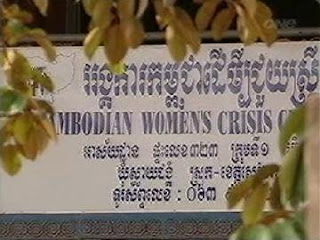
For Saturday and Sunday this weekend the Christian Aid 'Count Your Blessings' calendar focuses on mothers in need of refuge and protection from violence. They cite the example of Pak, a 23 year old women in Cambodia. She lives in a women's refuge in Phnom Penh run by Cambodian Women's Crisis Centre (CWCC) a partner agency of Christian Aid. She sought help after her husband had beaten her unconscious. She is being helped to bring her case against her husband to court and hopefully will receive training to rebuild her life safely with her children. You can read more about t he work of Christian Aid in Cambodia here. Christian Aid suggests today giving thanks for mothers throughout the world and the organisations that work to protect them. With Mothering Sunday tomorrow this seems a good thing to do. Image source: Graham Cleghorn

Equality in Democracy

Image
Equality, particularly gender equality, is the theme of Christian Aid's 'Count Your Blessings' Lent calendar this week. Today's focus is parliamentary representation. The UK has made a little progress in this area in the last century. 100 years ago there were no women in either the House of Commons or the House of Lords. The first woman in the House of Commons took her seat in 1919, but it was not till 1958 there was a woman in the House of Lords.  We still have a long way to go in the UK. The percentage of women overall in the Westminster Houses of Parliament is less than 25% . This is lower than most of our Western European neighbours. The world-wide league table  as at 31 December 2011 produced by the Inter-Parliamentary Union has Rwanda in top place with  56.3% in the Lower House and 38.5% in the Upper House. A number of countries have no women in their lower or single house. Some of those with an upper house include some women in the upper house e.g...