Posts

Showing posts with the label O Antiphons

Winter Solstice: The Darkest Day of the Year

Image
In the Northern hemisphere, today has the shortest number of hours of daylight. The further north you are, the less light you will see. I'm writing this in mid afternoon light, but today it is nearly sunset time. Where I am, the sky is heavy with rain clouds and it's raining, so there's even less light than usual. I'm longing to see evidence of the nights getting shorter and the days longer, a process that begins after today. After sunset today, it may be possible to see a 'Christmas Star', a bright light in the sky when the planets Jupiter and Saturn will appear close together, although in reality will still be 400 million miles away from each other. This is a very rare event. In the UK it may be possible for some people to see it by looking south-west from about an hour after sunset. But, given the current weather, I'm not expecting to see it. It is a dark time for the world in so many ways today. We are in the middle of a pandemic, which where I live is ...

O Emmanuel, come to save us

Image
The last day for the great Advent antiphons is today. Tomorrow is Christmas Eve and the waiting of Advent will be over. This last Advent Antiphon is 'O Emmanuel'. Like the others on the preceding 6 days it is appropriate to sing this as a response to the Magnificat at Evening Prayer. Emmanuel is a name given to Jesus and means 'God with us'. One English translation of the O Emmanuel response prayer is: O Emmanuel,   our King and Lawgiver,   the Expected of the Nations and their Savior,   come to save us, O Lord our God. There is a hidden message in the Latin titles of the O Antiphons. In reverse order they are: O E mmanuel O R ex O O riens O C lavis O R adix O A donai O S apienta If you take the 1st letter of each title in reverse as I have set them out above, starting with today's, then you find spelt out the Latin words 'Ero Cras'. In English this means 'Tomorrow I come'. I love the sense of expectancy in that phrase, n...

O King of the nations, come and save the human race

Image
It is 2 days before Christmas Eve in the Advent count down to Christmas. The O Antiphon for Evening Prayer today is 'O Rex Gentium', or in English 'O King of the Nations'. Today's antiphon comes as a reminder that Jesus the baby of Bethlehem is born for all people, to rule over all. Today's antiphon is a prayer asking God to save all humanity, all creation. An English version of this antiphon is: O king of the nations, and their desire,   the cornerstone making both one:   Come and save the human race,   which you fashioned from clay. Like the other Advent O Antiphons it uses titles for the coming Messiah, the Christ, the anointed one. There are 3 titles here: King of the nations (or the Gentiles) Desire of the nations Cornerstone who makes Jew and Gentile one The imagery in this prayer is based on many Biblical references. Here is a selection of them: From the Book of Revelation ...Great and amazing are your deeds,   Lord God the...

O Dayspring: come to lighten our darkness

Image
It's the shortest day here in the northern hemisphere, with the winter solstice this year falling at 10.44 am GMT. Every year I long to get past this day. I don't like reduced hours of daylight and I long for the hours of daylight to increase, as they will soon. Darkness is not only a physical phenomenon that affects us physiologically and emotionally. Darkness can be political, societal, ideological and spiritual. Humanity has great need of true enlightenment, the light of true wisdom that bears the fruit of love, joy and peace in a world ruled with justice and mercy. The Christmas celebrations are about light coming into the world. Christians celebrate that Christ the Light of the world enters our spiritual and physical darkness. God comes where we are. Light shines in the darkness. These words of the prophet Isaiah are often read at Christmas services: "The people who walked in darkness  have seen a great light;  those who live in a land of deep darkness ...

O Key of David, come

Image
A key can unlock or lock a door. A key can open an entrance to a passageway to who knows what delights.  A key can set prisoners free. A key can be a symbol of authority and power. What or who is the 'Key of David'? As with the other names in the Advent O Antiphons used in the last week of Advent the Key of David is a name used by Christians for Jesus Christ. The key of David phrase is found first in the Hebrew scriptures. In Isaiah 22 there is a denunciation of self-seeking officials and a statement that the Lord will call Eliakim son of Hilkiah. The key of David is mentioned in a description of Eliakim's duties as royal chamberlain to King Hezekiah of Judah. Eliakim held the power and responsibility for peaceful and just government. "I will place on his shoulder the key of the house of David; he shall open, and no one shall shut; he shall shut, and no one shall open." Isaiah 22:22 Christians see in those words from Isaiah 22:22 a type or symbol o...

O Root of Jesse: come and deliver us

Image
The 3rd of the Advent O Antiphons (refrains) sung with the Magnificat (song of Mary) at Evening Prayer today is 'O Radix Jesse' meaning 'O Root of Jesse'. If you don't know what the Advent O Antiphons are take a look at the 1st post in this daily 2016 series for the last week of Advent.  What's the 'Root of Jesse' got to do with the run-up to Christmas? Why refer to Jesse in this last week of Advent? Who was Jesse anyway? Many hundreds of years before Christ, Jesse was a sheep farmer in Bethlehem and father of many children. Jesse was faithful to God and is significant as the father of his youngest child David who was anointed by the prophet Samuel to be King over Israel. (You can read that story in 1 Samuel 16: 1 - 13 ). Both Jesse and King David are listed in the Gospel of Matthew's genealogy of "Joseph the husband of Mary,   of whom Jesus was born,   who is called the Messiah." ( Matthew 1: 1 - 17 ) By the time of...

Come Emmanuel - God with us

Image

Shortest Day of the Year

Image
I  don't like long nights and short days, so I'm grateful not to live further north than I do. Here in the Northern Hemisphere today is the one with the shortest hours of daylight. After today we look forward to gradually lengthening days. So it seems fitting that the Advent Antiphon said or sung today before the Magnificat at Vespers in some Christian traditions is 'O Oriens' meaning 'O Rising Sun' (or Morning Star or Day Star). It is inspired by these words from Isaiah: "The people who walked in darkness have seen a great light; those who lived in a land of deep darkness - on them lights has shined." Isaiah 9:2 Here is one English translation of the original Latin words of 'O Oriens': "O Day Star,   splendour of eternal light and son of justice:   Come, and illumuninate those who are sitting in darkness   and in the shadow of death. And here is one sung version together with Mary's Song (the Magnificat). Image ...

O Come O Come Emmanuel

Image
The house is clean (ish), the tree decorated, presents wrapped, food stocks ready for the family who will arrive over the next 3 days. Advent is almost over. Christmas is nearly here, the great celebration of 'God with us', 'Emmanuel'. If you have been busy preparing, why not take 3 - 4 minutes to be still, rest, watch a flickering candle and listen to this beautiful  version of 'O Come, O Come Emmanuel'. For another version of this last of the 'O Antiphons' for use in the 8 days before Christmas Eve see my post last year here .

O Emmanuel: O God with us

Image
It's the day before Christmas Eve.  As Advent ends the 7th and last of the 'O Antiphons' to be sung at Evening Prayer is 'O Emmanuel'. Emmanuel means 'God with us' or 'with us is God'. The prophet Isaiah wrote: "Therefore the Lord himself will give you a sign. Look, the young woman is with child and shall bear a son, and shall call him Immanuel."     Isaiah 7: 14 NRSV The English words are: O Emmanuel, our king and our lawgiver, the hope of the nations and their Saviour: Come and save us, O Lord our God. Listen to and look at this version: Image Credit: Bryony Taylor here 

O Rex Gentium: O King of the Nations

Image
2 days before Christmas Eve the 6th of the 'O Antiphons' sung at Vespers or Evening Prayer uses the title 'King of the Nations' for the coming Messiah, the anointed one. In the book of Isaiah is this prophecy: "For a child has been born for us, a son given to us; authority rests upon his shoulders; and he is named wonderful Counsellor, Mighty God, Everlasting Father, Prince of Peace."  Isaiah 9: 6 An English version of this antiphon is:  O king of the nations, and their desire, the cornerstone making both one: Come and save the human race,   which you fashioned from clay. Here is the 'O Rex Gentium' antiphon with the Magnificat (Mary's Song) sung in Latin to a Gregorian chant, but with English subtitles. Image Credit: John Piper's window Christ in Majesty, Lichfield

O Oriens: O Dayspring

Image
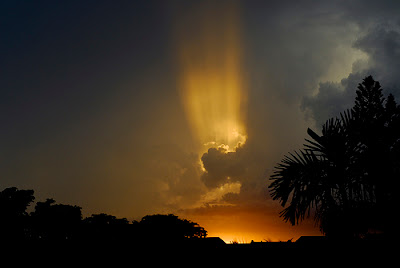
The 5th of the Advent 'O Antiphons' is inspired by these words of the prophet Isaiah, often read at Christmas services: "The people who walked in darkness have seen a great light; those who live in a land of deep darkness - on them has light shined."  Isaiah 9:2 For those of us who live in the Northern Hemisphere it seems especially appropriate to read these words today 21 December, which has the shortest hours of daylight of the year. After today we can look forward to the nights getting shorter and the days longer. The deeper meaning for Christians is the association with Christ the Light of the World coming into its spiritual darkness. Even so, come Lord Jesus. "O Morning Star, splendour of light eternal and son of righteousness: come and enlighten those who dwell in darkness and the shadow of death." Here's a beautiful Gregorian chant version with solo tenor voice: Image Credit: JustSimplePhoto06 on Flickr, CC License  

O Clavis: O Key of David

Image
This post continues a series on the 'O Antiphons' used as refrains during Evening Prayer in the last week of Advent. Today's refrain, used with the Song of Mary (Magnificat) is 'O Key of David' or in Latin 'O Clavis'. It is a prayer for freedom for all who need a way out of whatever imprisons us or keeps us in darkness. The 'Key of David' points to Jesus as the one able to open such doors of entrapment. Well worth reading are Rosemary Hannah's thoughts on this antiphon in a post from last year at Thinking Anglicans . She writes: There is a terrible reality about David’s mixed desires and ambitions which make him seem astonishingly contemporary. In that sense, today’s antiphon seems to fit him well – and in fitting him, to fit all those of us who know too well our flawed and dark passions, our divided loyalties and the complexities of our lives. It promises the rescue (by ‘great David’s greater son’) of those in darkness, trapped and i...

O Radix Jesse: O Root of Jesse

Image
Chartres Cathedral in France has some amazing stained glass. This photo is of the Jesse window, created about 1150 A.D., one of the few windows that survived the fire of 1194. Jesse was the father of King David into whose family Jesus was born many generations later. The 3rd of the Advent O Antiphons (refrains) sung with the Magnificat (song of Mary) at Evening Prayer today is 'O Radix Jesse' meaning 'O Root of Jesse'. One of the Bible passages on which it is based is Isaiah 11: 1 - 11 which begins: "A shoot shall come out from the stump of Jesse, and a branch shall grow out of his roots. The spirit of the Lord shall rest on him, the spirit of wisdom and understanding, the spirit of counsel and might, the spirit of knowledge and the fear of the Lord. His delight shall be in the fear of the Lord." An English translation of the original Latin antiphon for today is: "O Root of Jesse, standing as a sign among the peoples; before you kings will...

O Adonai: O Lord

Image
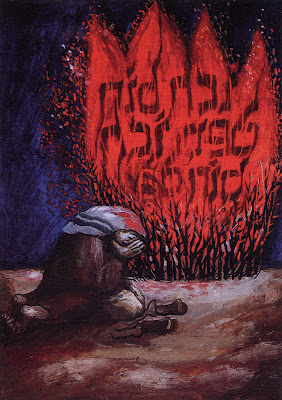
Yesterday I posted the first of the refrains ('antiphons') used to accompany Mary's Song (the Magnificat) at Evening Prayer during the last 7 days of Advent. The second, used this evening is 'O Adonai'. One English translation is: "O Adonai and leader of the House of Israel,  who appeared to Moses in the fire of the burning bush  and gave him the law on Sinai:  Come and redeem us with an outstretched arm." 'Adonai' is generally translated as 'Lord' - it stands for the personal name of God, revealed to Moses, represented by 4 letters in the Hebrew scriptures and considered too holy to be spoken. Once again Malcolm Guite has a sonnet inspired by today's Antiphon and the Bible readings that are its basis (Exodus 3:2; Exodus 24:12; Isaiah 11: 45; Isaiah 22:22) There's a reflection with some wonderful images on the blog of Blue Eyed Ennis, based on today's antiphon. And for listening, looking and praying I like...

O Sapienta: O Wisdom

Image
This detail from a painting in the Capitoline Museum, Rome is of Christ as a boy in the temple astonishing his elders with his wisdom. Seven evenings before Christmas Eve there's a tradition, in many places that sing evening prayer or vespers to add to the Magnificat what are called the 'O Antiphons', prayers of invocation to the coming Christ. Each one uses a title of the Messiah and is based on prophecies in the book of Isaiah. These begin today 17 December with 'O Sapienta' meaning 'O wisdom'. This is based on Isaiah 11: 2-3 and Isaiah 28:29. In Common Worship liturgy the English words are: "O wisdom, coming forth from the mouth of the Most High, reaching from one end to the other, mightily and sweetly ordering all things: come and teach us the way of prudence." Malcolm Guite has written a lovely sonnet on this theme , quoted below: O Sapienta I cannot think unless I have been thought, Nor can I speak unless I have been spoken. ...