Posts

Showing posts with the label remembrance

Remembrance Sunday 2019

Image
Remembrance Sunday is when we remember the worst people do to each other and the best people do for each other. It is when we remember that “the war to end all wars” failed to do that. It is a time to lament that there have been few days of peace since the Armistice that ending the fighting of World War 1 on 11 November 1918.  There is no war that is not horrible, however 'noble' a cause might be, or said to be. One of its many horrible aspects is that most casualties in modern conflicts are civilians, including children.  What a mess the world is in. We could blame people in power. We could blame uneven distribution of resources. We could ask, why does God allow dreadful things to happen? This Welsh teenager's letter to God was written some decades ago, but it says what many feel about lack of peace between people: "Dear God,  I’m writing to complain about the state of the world. I would like to know what you’re going to do about it. Are you still in charge...
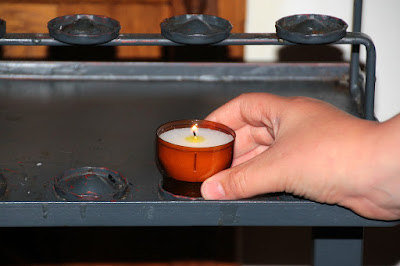
All Souls Day

Image
Should Christians pray for the dead? Or simply remember them with thanksgiving? In the Church of England the 16th century, reformers made no provision for the observance of All Souls Day (2 November) in the Book of Common Prayer. That was because of its association with abuses of that time, relating to praying for the dead and paying for masses to be said to ease the departed through purgatory, or paying for divine pardons. Number 22 of the 39 Articles (1562)is strongly worded: "The Romish Doctrine concerning Purgatory, Pardons, Worshipping and Adoration, as well of Images as of Reliques, and also invocation of Saints, is a fond thing vainly invented, and ground upon no warranty of scripture, but rather repugnant to the Word of God." Having been brought up in a Reformed Protestant tradition, I was taught that praying for the dead was wrong, but always right to pray for the living. I was critical of Catholic friends who prayed for someone after they had died. In my...

Remembrance Sunday 2017

Image
A lot of words will be said and sung today in Remembrance Sunday services and commemorations across the UK. Words made familiar over time will be repeated. Some words said and sung today will be poignant and beautiful, some nostalgic and sentimental, some lamenting. Other words may be hopeful, pointing to a vision of a better world and inspiring children, women and men to work for 'all that makes for peace and builds up the common good'. Whatever is said and sung today tends to raise more questions than they answer. The one word, 'why' seems to hover over all our remembering. Perhaps the best thing about Remembrance Sunday is silence rather than words. The 2 minute silence is more eloquent on such occasions than our inadequate and sometimes misguided words. And silence can be the best way to pray. If you want some words for a prayer today, here is a prayer by Stephen Vincent Benet that I hope you thing is worth praying. It is not a specifically Christian...

Why I don't wear my poppy with pride

Image
After seeing over the last few weeks many calls on social media to 'wear your poppy with pride' and noticing the extreme ideologies of some of those who promote this idea, I have to get this off my chest this 11 November:  I don't wear my poppy 'with pride'. I won't wear my poppy 'with pride'. I hope I never will wear my poppy 'with pride'. To be clear, I have no objection to wearing a remembrance poppy on on 11 November and Remembrance Sunday, or even for a few days before in this remembrance season. Every year I buy at least one poppy sold by the Royal British Legion in the good cause of supporting the armed forces community and their families. I don't object to wearing such poppies. And yes, when it is appropriate I do wear one. What I object to is the idea often promoted by far-right nationalist organisations (such as Britain First ) that I should wear my poppy 'with pride'. I don't believe I should ...

Remembrance Sunday: Poppy Meditation

Image
'In Flanders fields the poppies blow, between the crosses, row on row.' Blood red poppies, symbols of lives lost in bloody battle, of bodies disfigured, of families shattered, ... but a sign too of new life in war-ravaged soil. The red dissolves to white as the blood is drained. White poppies rise, symbols of lives lost as a consequence of war, of bodies maimed, of families broken, ...  but a sign too of peace, of hope, of working together across the barriers for justice, forgiveness and reconciliation. ('Meditation: Poppies' by  Gillian Collins ) Image Credit: Geograph, CC License

Hanging out the washing with my mother

Image
One of the joys of spring is there are now more days when I can hang the washing out to dry in the garden. I have done that today.  Almost every time I have done that since my mother died in the spring of 2013, I remember her. As I perform my mother's same actions, taking pegs from their bag, hanging washing on a rope line in the garden, the memories are vivid. Some of those memories are from childhood when I watched or helped her hang the washing, or learnt from her how to count the pegs, "1 peg, 2 pegs, 3 pegs..." Others are from my teen years when I could take responsibility for the task, although my methods of hanging were different from hers. (They still are!) More recent memories are of my mother in her nineties,  vulnerable to falling,  eager to hang the washing out in the sun or take it in when it was ready to iron or the rain started. Towards the end, when she had a live-in carer, she no longer needed to hang out the washing or take it in, or do the ironing....

On not having a funeral

Image
When my mother died, just over a year ago, her body was not buried or cremated. It still hasn't been. Many years earlier she chose to donate her body, after its death, for medical education, training and research. As her children we ensured her intention was honoured. Eventually there will be a cremation but that could still be a long time ahead. When consenting to donation a donor can stipulate a time limit for the use of their mortal remains. My mother chose not to state a time limit, signing her consent for her body or parts of it to be used for an indefinite period of time. This was generous on her part, but I have not found it easy - well, grief is always complicated anyway isn't it?  We did organise a thanksgiving and memorial service for her at her church about 3 weeks after her death. It was good. She was a Christian. Her reason for donating her body was not because she did not want a Christian funeral. Apart from wanting what was no longer any use to her to be us...

Remembrance Day 2013

Image
A few minutes ago I kept the traditional 2 minute silence for this day Remembrance Day/Armistice Day. The 11th hour of the 11th month of 1918 was the official end of World War 1, the 'war to end all wars'. If only it had. I haven't much that is original to say about this commemoration, but have read some excellent material written by others. As a remembrance round-up here is a taster to share with you: A thoughtful broadca st talk by Dr Sam Edwards is summarised in the BBC News Magazine and asks How should we remember a war?  He writes of how memoria ls are changing and suggests that now the last veteran of World War 1 has died the time is now right to look at that war with new eyes: "The time is right to complicate our traditions of commemoration - not as a means to denigrate or dismiss the sacrifices asked of - and given by - British soldiers, but in order to recast the prism through which these sacrifices are refracted.  For the events of 1914-18 did not j...

Remembrance Sunday 2013

Image
On Remembrance Sunday... At the going down of the sun and in the morning we will remember them. We will remember them. Thanks to the Royal British Legion poppies continue to be a symbol of lives given, lost or damaged by war and the need for support for those affected. Not all who die or suffer through war are heroes. Many performed heroic acts in service with the armed forces in the wars of the last century. All deserve respect and should be honoured and remembered with thankfulness. But in modern wars and conflicts the majority of casualties  are civilians, including children. You only have to think of places like Syria. We remember them too. What a mess the world is in. We could blame people in power. We could blame uneven distribution of resources. We could ask, why does God allow dreadful things to happen? I wonder - would he ask us the same question? In many Remembrance Sunday services today, these words of Jesus from the Sermon on ...

Remembrance Sunday

Image
96 years ago, on the western front during World War 1, Private Cecil Roughton picked a poppy.  He sent it to his parents as a, “Souvenir from a front line trench near Arras, May 1916.” He survived to old age, as did the carefully pressed poppy. Last year his family gave it to the Royal British Legion .  Thanks to that organization, poppies continue to be a symbol of lives given, lost or damaged by war and the need for support for those affected. Today in the UK is Remembrance Sunday . Today we remember the worst people do to each other and the best people do for each other. We remember that “the war to end all wars”  didn’t; that there have been few days of peace since 11 th November 1918; that this year more UK service personnel came home from Afghanistan wounded or dead. And in many places of the world more people will die today as a result of conflicts. More families will grieve. T here’s no war that isn’t horrible. According to UN estimates, around t...

Remembering 9/11

Image
Lead me from death to life, from falsehood to truth; lead me from despair to hope, from falsehood to trust; lead me from hate to love, from war to peace. Let peace fill our heart, our world, our universe. Notes on this prayer: Mother Theresa first used this prayer publicly in St James's Church, Piccadilly, London in July 1981. It is known as the 'Universal Prayer for Peace' Its origin is Hindu and is adapted to be suitable for people of all faiths. In this form it is published in the New Zealand Prayer Book p. 164. See Bosco Peter's prayer reflection here . Image Credit: David Farquhar, photo on Flickr, CC License

We Will Remember Them

Image
The last 4 minutes of the 1968 film 'Oh What a Lovely War' brings home in a particularly poignant way the tragic loss of life in World War 1.   We will remember them. We will remember them. And may our remembering be such as makes for peace.

Pilgrimation Retrospective Part 2: To be a pilgrim

Image
What is a pilgrim? Someone on a pilgrimage? Through life or to places of special meaning?  Pilgrimage involves a significant journey that may be hard or long. It's travel but not tourism.   Pilgrims may follow a guide but are open to the unexpected on the way. Bishop Alan makes an interesting comment about the difference between being a pilgrim and a tourist in his post Two Roads to Remembrance . He describes 'resonant remembrance' (in contrast to 'contemplative remembrance') as messy: "You put yourself through a routine with your wits around you, but floating on the surface, so that a stray thought or impression can resonate against something in you, and bring you up against something you thought you had forgotten all about, but can now be understood in a new light." Putting myself through a routine devised by others (the programme for a pilgrimage to the Holy Land) freed me from responsibility of deciding what to do. It allowed me to be enter ...